
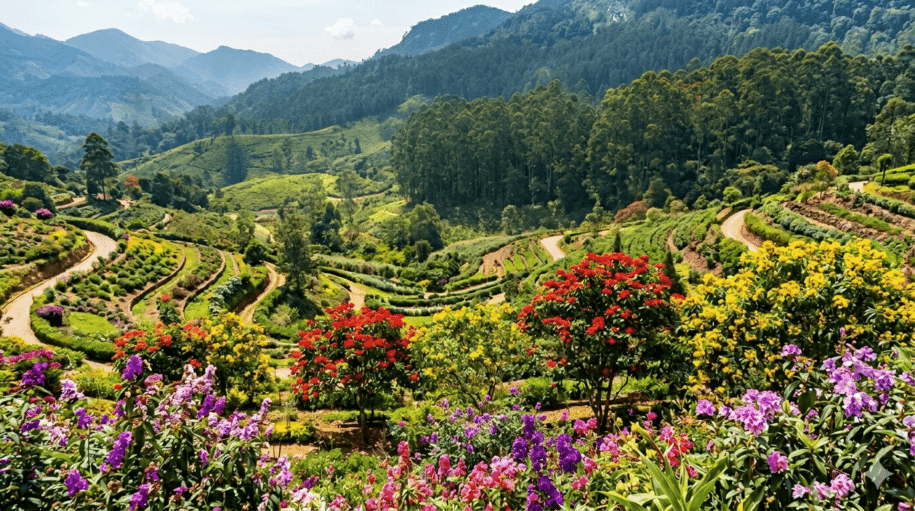
A Guide to the Island's Year-Round Floral Spectacle
We’ve spent enough time wandering through Sri Lanka’s gardens and forests to tell you this: the island doesn’t do seasons the way you might expect. There’s no “spring bloom” followed by barren months. Here, something’s always flowering somewhere. Could be rhododendrons up in Horton Plains while frangipani trees explode with color down in Anuradhapura. The secret? Geography and rainfall patterns that basically guarantee flowers twelve months a year.
The island straddles the equator with mountains reaching past 2,500 meters. Two separate monsoons hit different parts of the country at different times. So while the southwest gets drenched in July, the east stays dry. This creates what botanists call microclimates—fancy word for “different weather in different places.” Flowers have figured this out over millions of years.
The Blooming Calendar
January – March: Peak Time
Most guidebooks call this the best season, and honestly, they’re right. Rain stays away from most areas. Temperatures hover in that comfortable range where you’re not sweating through your shirt but don’t need a jacket either.
Up in the highlands, rhododendrons go absolutely wild. We’re talking trees—not the little bushes you see in European gardens—covered in red and pink flowers. Horton Plains looks surreal during this period. The Knuckles Range fills up with wild orchids if you know where to look (hint: hire a guide who actually knows the trails).
Temple ponds across the cultural triangle fill with lotus blooms. White ones first, then pink. They open right after sunrise, which means early mornings if you want photos. The Royal Botanic Gardens, Peradeniya maintains excellent lotus collections alongside their world-renowned orchid displays.
One trick: get to the hill country viewpoints before 7 AM. The mist burns off fast, but that hour when it’s clearing? That’s when dewdrops catch the light and rhododendron petals seem to glow.
April – June: The hot Months
Temperature climbs. Humidity makes everything sticky. But the flowers don’t care.
Flame of the Forest trees—locals call them Flamboyant—put on their big show now. Entire canopies turn orange-red. You’ll spot them lining the Kandy road, around Sigiriya, basically anywhere in the dry zone. Frangipani does its thing too, pumping out that distinctive scent that hotels love.
If you’re here in May, catch Vesak. The full moon festival turns every temple into a flower exhibition. Anuradhapura and Polonnaruwa especially. Thousands of blooms arranged into elaborate designs. It’s excessive in the best possible way.
Fair warning: April and May get seriously hot in the lowlands. Start your temple visits at dawn or wait until 4 PM. The flowers will still be there, and you won’t feel like you’re melting.
July – September: Don’t Skip the Monsoon
Yeah, it rains. Sometimes heavily. A lot of tourists bail during these months, which is exactly why you should consider coming.
Sinharaja Rain Forest hits peak condition. Everything’s green, wet, dripping. Endemic flowers that need constant moisture finally bloom. Water lilies spread across every pond—they actually prefer the rain-fed conditions. The spice gardens around Matale show off flowers you wouldn’t see otherwise. Cardamom blooms are delicate, almost translucent. Vanilla flowers last maybe one day, so spotting them takes luck.
Peradeniya stays accessible even in heavy rain. Paths drain well, the orchid house keeps you dry, and there’s something peaceful about wandering through gardens when it’s just you and the occasional dedicated botanist.
Bring a decent rain jacket. Those cheap plastic ponchos fall apart. Your camera needs protection—even a ziplock bag works better than nothing.
October – December: The Second Wave
The northeast monsoon switches up the rain patterns. East and north get wet, west and south often stay dry. Hill country weather gets unpredictable.
This is Nil Manel season—the national flower. These blue water lilies only open in mornings, closing up tight by afternoon. You’ve got maybe a four-hour window. Peradeniya has dedicated ponds for them. So do most major temples.
Tea country wildflowers pop up between the plantation rows. Nothing huge, but the color contrast against all that green makes for good photos. December brings holiday decorations, which means floral displays in every hotel lobby and shopping area.
Four Must-See Flowers
Nil Manel (Blue Water Lily)
Sri Lanka picked this as the national flower for reasons beyond just looks. Buddhist texts reference it constantly. The whole opening-at-dawn, closing-at-dusk cycle symbolizes enlightenment or purity or renewal, depending on which scholar you ask.
Find them in ponds and wetlands October through March. Early morning visits aren’t optional—these flowers shut down before lunch. Peradeniya keeps them year-round in controlled ponds. Temple complexes do too, especially Kelaniya just outside Colombo.
Rhododendrons
The tree-sized variety, not those compact garden types. Some push 10 meters tall with flower clusters the size of soccer balls. Seriously impressive when you see them in person.
February-March in Horton Plains. The World’s End hike takes you through proper groves of them. Morning mist usually surrounds the blooms—bring layers because it gets cold up there, even in “summer.”
Orchids
Two hundred species, give or take. Half of them exist nowhere else on the planet. They grow everywhere from sea level rainforests to mountain peaks.
The smart move? Hit Peradeniya’s Orchid House. Curators keep specimens from multiple elevations, ensuring something’s always flowering. For wild orchids, you need a naturalist guide. They spot them by leaf patterns even when nothing’s blooming.
Lotus
Pink and white varieties dominate temple ponds. The classic Buddhist image—pristine flowers emerging from muddy water.
Kelaniya Raja Maha Vihara outside Colombo maintains beautiful examples. The ancient cities have them scattered throughout temple complexes. During poya days (full moon), devotees bring offerings of fresh-cut lotus. Watch the sellers outside major temples early morning—they’ll have armfuls.
Where to Actually Go
Peradeniya Botanical Gardens runs 147 acres of curated collections. The orchid house alone justifies the entrance fee. Don’t miss the palm avenue or the bamboo grove. Seasonal beds rotate throughout the year.
Horton Plains National Park sits around 2,200 meters elevation. Rhododendrons bloom against grasslands and patches of cloud forest. Everyone rushes to World’s End for the view, but slow down—the best flowers line the walking paths before you get there.
Sinharaja Rain Forest earned UNESCO status protecting species found absolutely nowhere else. You can’t navigate this alone. Too dense, too easy to get lost, and you’ll walk past rare blooms without recognizing them. Guides aren’t cheap but they’re worth it.
Hakgala Botanical Garden specializes in temperate stuff. Roses thrive in the cool climate (averages around 16°C). Flowers that would wilt within hours down in Colombo grow perfectly here.
Temple Gardens add cultural weight to the flower viewing. Temple of the Tooth in Kandy, Kelaniya, the Anuradhapura monasteries—all maintain serious gardens featuring traditional worship flowers.
What Actually Works
Match your dates to target species. Highland flowers February-March. Lowland blooms April-June. Monsoon specials July-September. Nil Manel October-December.
For photographers: early morning or late afternoon. Midday light washes everything out. Macro lens for orchids and detail work. Regular zoom for landscapes. Monsoon shooting needs weather protection—professional rain sleeves are ideal, but even a plastic bag rubber-banded around your lens beats nothing.
Temple rules matter. Shoulders and knees covered. Shoes off when required. Ask permission before photographing ceremonies. Never pick flowers from temple grounds or national parks. This should be obvious but apparently needs stating.
Guided tours cost more upfront but save time. A good naturalist identifies endemic species immediately, knows current blooming locations, and understands how recent weather affects flowering patterns. Worth paying for if you’re serious about seeing specific species.
Pack for extremes. Hill country mornings can hit 5°C even during warm months. Lowlands stay hot and sticky. Cotton holds moisture—quick-dry fabrics work better. During monsoons, accept that you will get wet. Plan around it rather than against it.
Bottom Line
Sri Lanka crams incredible flower diversity into roughly 65,000 square kilometers. The tropical location plus varied elevation plus two monsoon systems creates conditions where something’s always blooming somewhere. Highland rhododendrons transition to lowland flame trees. Temple lotus shares the stage with rainforest orchids.
The flowers integrate into daily life here in ways that go beyond tourism. Religious ceremonies require specific blooms. Traditional medicine depends on flowering plants. The national symbol is literally a water lily. This cultural connection adds depth that’s missing from purely botanical destinations.
Figure out what you want to see, then plan around it. Chase rhododendrons to mountain peaks in February. Track endemic orchids through Sinharaja during monsoon season. Watch lotus flowers open at ancient temple ponds at sunrise. For more travel planning resources and official information, visit Sri Lanka Tourism’s official website. Whatever pulls you toward Sri Lanka’s blooming seasons, the reality delivers.